
WELCOME BONUS 300%
UP TO €2000 + 100
FREE SPINS
UP TO €2000 + 100
FREE SPINS
Home → Blackjack
Blackjack at Ozwin-Casino: Variants, Rules and Payouts
Side Bets don't count towards bonus turnover
Certain side bets in live blackjack games at Ozwin-Casino do not contribute to the wagering requirements of bonuses. For instance, side bets available in Evolution's Infinite Blackjack, such as Any Pair, 21+3, Hot 3, and Bust It, are excluded from bonus turnover calculations. This means any wagers placed on these side bets will not reduce the amount that needs to be wagered before bonus winnings can be withdrawn.
The game contribution to bonus turnover at Ozwin-Casino specifies that table games contribute 10%, while slots contribute 100%. Therefore, understanding which specific bets within table games are excluded is crucial for players utilizing bonus funds. Side bets often carry a higher house edge, making their exclusion from bonus turnover particularly impactful for players aiming to meet wagering requirements efficiently.
This exclusion directly affects players who enjoy placing side bets alongside their main blackjack wagers. For example, a player betting €10 on the '21+3' side bet in Infinite Blackjack will not see that €10 count towards the 300% welcome bonus up to €2,000 plus 100 free spins wagering requirement. Players must focus their wagering on the main game or slots to clear the bonus.
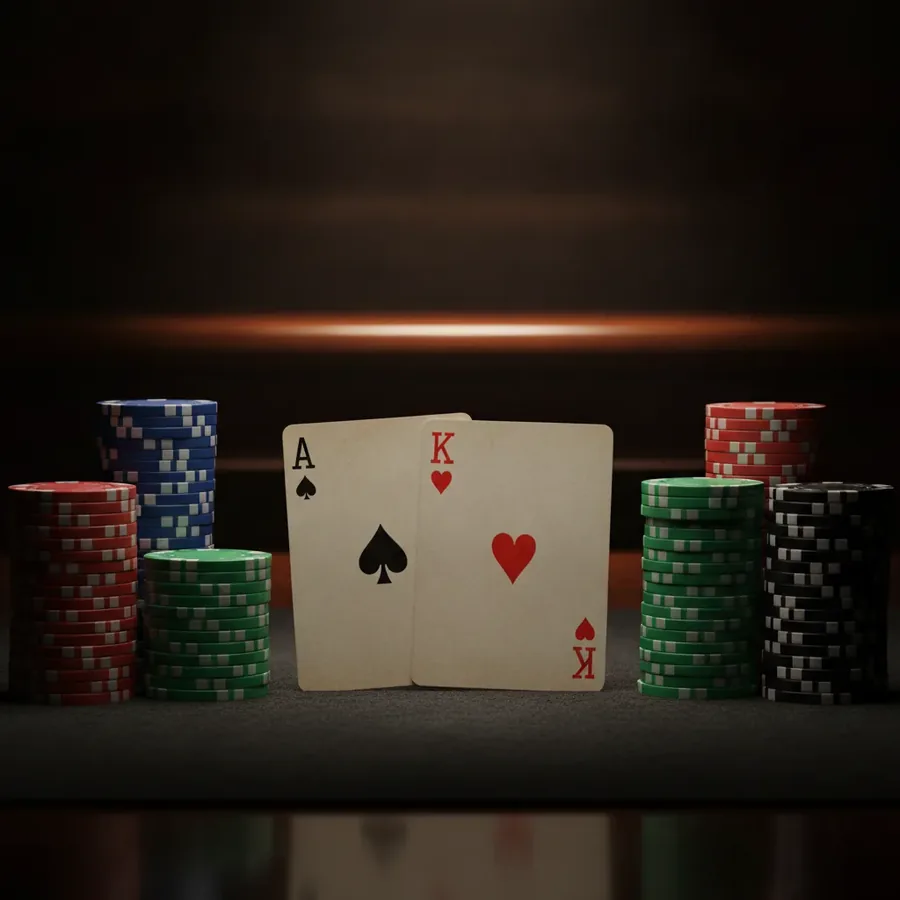
Error insurance: 7 percent additional house edge
Blackjack Insurance, a side bet offered when the dealer shows an Ace, presents a significant house edge of 7.47% in games using 6-8 decks. This bet, which can be up to 50% of the main bet, is a separate wager that pays 2:1 if the dealer has blackjack. However, standard basic strategy dictates always declining this insurance, as it is detrimental to the player's overall return.
The theoretical RTP for Blackjack Insurance with 6-8 decks is a low 92.53%, a figure substantially lower than the main blackjack game's RTP. While this specific insurance bet is often presented as a safeguard, its high house edge means that consistently taking it erodes a player's bankroll more rapidly. For instance, a €10 insurance bet that loses costs the player €10.
The impact of taking this insurance bet can be severe over time. For players not employing card counting techniques, where a true count of +3 or higher might alter the decision, the long-term consequence of placing this bet is a direct reduction in potential winnings. Over an extended play session, the accumulated losses from insurance bets can be substantial, further increasing the casino's advantage.
Infinite Blackjack vs Classic Seven-Seat Table
Infinite Blackjack, a popular live dealer variant, offers an unlimited number of player positions at the table, differentiating it from traditional seven-seat blackjack tables. This innovative feature means players are never turned away due to a full table, regardless of how many individuals are participating. This provides a consistently accessible gaming experience for all interested players, unlike the limited spots at a classic table.
The RTP for Infinite Blackjack is stated as 99.47% with optimal strategy, a competitive figure compared to other live blackjack offerings. Classic seven-seat tables, depending on their specific rules such as S17, DAS, and resplitting, can also offer high RTPs. For example, Blackjack Liberal Vegas Strip with liberal rules and a 3:2 payout boasts an RTP of 99.72%.
Players choosing Infinite Blackjack can also engage in four distinct side bets: Any Pair, 21+3, Hot 3, and Bust It, adding extra layers of betting potential. While these side bets are not counted towards bonus turnover, they offer alternative ways to wager within the game. Classic tables typically do not offer this extensive range of integrated side bets within the core game structure.
Infinite Blackjack uses the Six Card Charlie
Infinite Blackjack at Ozwin-Casino incorporates the 'Six Card Charlie' rule, a specific player-friendly condition. Under this rule, if a player is dealt six cards without exceeding 21, their hand automatically wins, regardless of the dealer's hand. This is a notable feature that provides an additional winning condition beyond the standard objective of beating the dealer's hand.
This particular rule enhances the player's advantage, as it creates an extra scenario for a win without requiring a higher RTP figure to be explicitly stated for this rule alone. The base RTP for Infinite Blackjack is 99.47% with optimal strategy, and the Six Card Charlie is one of the contributing factors to its favorable return for players.
The presence of the Six Card Charlie rule in Infinite Blackjack contrasts with many standard blackjack variations where such a rule might be absent or replaced by other bonus payouts. This rule offers a unique dynamic, as players can achieve a win even if their hand total is lower than the dealer's, provided they accumulate six cards without busting.
How many decks are in the shoe?
Information regarding the exact number of decks used in the shoe for all blackjack variants at Ozwin-Casino is not uniformly provided across all game types. For instance, Blackjack Insurance in games with 6-8 decks carries a high house edge. The number of decks directly influences the house edge and the effectiveness of certain strategies in blackjack.
However, some specific games do provide this detail. For example, Blackjack Insurance when played with 6-8 decks has an RTP of 92.53%. A reduction in decks, such as in a single-deck game with classic rules and a 3:2 payout, offers a significantly lower house edge of 0.15% and an RTP of 99.85%.
The number of decks is a critical factor in blackjack strategy and game dynamics. A shoe with fewer decks, like a single deck, generally offers a lower house advantage compared to games using multiple decks. This is why variations with fewer decks, such as the single deck option with a 3:2 payout, are often preferred by players seeking the best possible odds.
Blackjack variants at a glance
| Variant | Payout | House edge | Rule | Bet range |
|---|---|---|---|---|
| Blackjack Liberal Vegas Strip (liberale Regeln, 3:2) | 99.72% | 0.28% | Günstigste Regelkombination: S17 + DAS + Resplit + Late Surrender. Standardabweichung 1,15 | Blackjack 3:2, Gewinn 1:1 |
| Blackjack Ein Deck, klassische Regeln, 3:2 | 99.85% | 0.15% | Weniger Decks = niedrigerer Vorteil; ein Deck gibt ca. −0.48 Prozentpunkte gegenüber 8 Decks. Oft durch 6:5 Auszahlung kompensiert. | Blackjack 3:2, Gewinn 1:1 |
| Blackjack Auszahlung 6:5 statt 3:2 (6 Decks) | 98.15% | 1.85% | Ersatz von 3:2 durch 6:5 fügt exakt +1.39 Prozentpunkte zum Vorteil des Casinos hinzu – stärker als jede andere Regeländerung. Bei $10 Einsatz zahlt Blackjack $12 statt $15. | Blackjack 6:5, Gewinn 1:1 |
| Blackjack Insurance / Versicherung (6–8 Decks) | 92.53% | 7.47% | Separate Nebenwette bis 50% der Hauptwette, wenn der Dealer ein Ass hat. Basisstrategie schreibt IMMER Ablehnung vor (außer Karten zählen bei True Count ≥ +3). Bei einem Deck Vorteil ≈ 5.88% | Insurance 2:1 |
| Blackjack Surrender (Late Surrender) – Regel-Effekt | n.a. (Regel-Modifikator) | −0.08 Prozentpunkte | Spieler gibt Hand nach Dealer-Blackjack-Prüfung auf, verliert die Hälfte des Einsatzes. Verbessert RTP um ca. 0.08 Prozentpunkte. Early Surrender ist wesentlich wertvoller (bis −0.6 Prozentpunkte), aber extrem selten. | Rückzahlung 50% des Einsatzes |
| Blackjack Split / Double / H17 – Regel-Effekte | n.a. (Regel-Modifikatoren) | H17 +0.22 Prozentpunkte; RSA −0.08 Prozentpunkte; DAS −0.14 Prozentpunkte | Dealer Hits Soft 17 verschlechtert RTP um 0.22 Prozentpunkte; Resplit Aces verbessert um 0.08 Prozentpunkte; Double After Split verbessert um ca. 0.14 Prozentpunkte; 6 Decks statt 8 – ca. 0.02 Prozentpunkte. | Double – Einsatz ×2 mit einer Karte; Split – bis 4 Hände; Ass-Split meist mit einer Karte. |
Bust at 22: Stake Lost Immediately
In some Blackjack variants, a player's hand totaling 22 is considered a bust, meaning the stake is lost immediately. This rule applies to certain tables where the dealer does not hit on a soft 17.
For instance, standard Blackjack rules, like those found in "Blackjack 6 Decks, S17, DAS, DOA," stipulate that a bust results in an automatic loss of the bet. This differs from situations where the dealer might bust instead, leading to player wins. Understanding this immediate loss condition is crucial for strategy.
The consequence for players is a potentially faster depletion of their bankroll if they frequently bust at 22. This rule emphasizes the importance of careful card counting and strategic decision-making to avoid exceeding 21, especially on tables with this particular condition.
Highroller from 500 EUR per hand
Certain high-stakes Blackjack tables are available, allowing players to wager up to €5,000 per hand, as seen in "Quantum Blackjack Plus Live" and "Infinite Blackjack." For players preferring extremely high stakes, a threshold of €500 per hand is an accessible entry point. These tables cater to a clientele seeking significant betting opportunities.
The availability of such high betting limits means that significant wins or losses can occur within a single hand. For example, betting €5,000 on a 3:2 payout for a Blackjack would yield €7,500, showcasing the potential scale of play. This is significantly higher than the typical €1,000 limit seen in "Blackjack Party."
Players choosing to engage at these elevated stakes should be aware of the increased financial risk and reward. The higher stakes on tables like "Infinite Blackjack" and "Quantum Blackjack Plus Live" mean that a losing streak could rapidly impact a player's overall funds, necessitating strict bankroll management.
What doesn't count as Blackjack after Split?
When a player splits their initial two cards, a resulting hand of 21 is not automatically considered a Blackjack in some game variants. This rule is often applied to ensure that a split hand, even if it totals 21, does not receive the standard 3:2 Blackjack payout. Standard Blackjack rules typically award 3:2 for a natural Blackjack.
For example, in games with the rule "Ass-Split meist mit einer Karte," a 21 achieved after splitting aces might not be treated as a natural Blackjack. This means that instead of receiving a 3:2 payout, the hand would likely pay 1:1, similar to any other winning hand. This is a key distinction from a natural Blackjack on the initial deal.
The consequence for players is a reduced payout when achieving 21 after a split, compared to a natural Blackjack. For instance, on a €100 bet, a natural Blackjack pays €150, but a 21 after a split might only pay €100, representing a €50 difference in potential winnings.
No Double Down on three cards
The option to double down, where a player doubles their bet and receives only one more card, is often restricted to the initial two cards dealt. This means that if a player has already received three cards, they are typically ineligible to double down, regardless of the hand's total. This rule is present in many standard Blackjack variants.
For example, the rule "Double – Einsatz ×2 mit einer Karte" implies this restriction. If a player's hand consists of three cards, the opportunity to double the bet is removed. This contrasts with Blackjack Liberal Vegas Strip, which offers more liberal rules. This limitation is a common feature to maintain the house edge.
The impact on players is a reduced strategic flexibility. If a player's hand is in a favorable position after receiving their third card, they lose the opportunity to double their potential winnings. This can lead to lower payouts in certain scenarios compared to games where doubling down on three cards might be permitted.
Insurance Pays 2:1 Yet Still Costs Money
The "Blackjack Insurance / Versicherung" side bet offers a payout of 2:1 if the dealer has Blackjack. This bet is typically up to 50% of the main bet and is offered when the dealer's upcard is an Ace. Despite the 2:1 payout, the insurance bet has a high house edge of 7.47%.
In "Blackjack Insurance / Versicherung," the RTP is listed at 92.53%, indicating a significant disadvantage for the player over the long term. This is exacerbated by the fact that standard strategy dictates always declining this bet unless card counting indicates a true count of +3 or higher. The house edge can be around 5.88% with a single deck.
The consequence for players is that consistently taking insurance, as recommended by the 2:1 payout might suggest, will likely lead to a net loss of funds. The high house advantage of 7.47% means that for every €100 wagered on insurance, an average of €7.47 is retained by the casino over time.
Early Surrender is removed from many tables
Blackjack Surrender offers players the option to forfeit half their bet after the dealer checks for blackjack. This rule, a 'Late Surrender', improves the Return to Player (RTP) by approximately 0.08 percentage points. However, a more beneficial 'Early Surrender', which allows surrender before the dealer checks, is extremely rare and significantly more valuable.
The standard rule for Blackjack Surrender involves the player giving up their hand after the dealer's blackjack has been confirmed, resulting in a loss of half the stake. While this specific rule modification offers a slight RTP improvement, the absence of Early Surrender on most tables means players miss out on a more substantial advantage.
For players seeking to optimize their game, the unavailability of Early Surrender at many tables represents a missed opportunity to reduce potential losses. The documented benefit of Late Surrender is modest, and its removal from numerous Blackjack variants limits strategic options for players focused on maximizing their RTP.
Bonus Lost Due to 10 Percent Contribution
The welcome bonus at Ozwin-Casino offers a substantial 300% match up to €2,000, coupled with 100 free spins. However, the wagering contribution for table games is set at a mere 10%. This means that for every €100 wagered on table games, only €10 counts towards the bonus turnover requirements.
To meet the wagering requirements on a €2,000 bonus, a player would need to wager €40,000 if table games contributed 100%. With a 10% contribution rate, this translates to a formidable €400,000 in wagers placed on table games, significantly increasing the time and risk involved.
This low 10% contribution rate for table games means that players who prefer these games are at a distinct disadvantage when trying to clear bonus funds. A player solely playing slots, contributing 100%, would only need to wager €40,000 to meet the same bonus conditions, highlighting the disparity.
Chose Wrong Table for 5 EUR Bankroll
For a player with a modest €5 bankroll, selecting the correct table is crucial for extending playtime. Many live blackjack tables, such as Quantum Blackjack Plus Live and Infinite Blackjack, allow wagers starting from €1 and going up to €5,000. These high maximum stakes indicate a table geared towards larger bankrolls.
While tables like Quantum Blackjack Plus Live and Infinite Blackjack have a low minimum bet of €1, making them theoretically accessible for a €5 bankroll, the inherent volatility of blackjack means a few losing hands can deplete such a small amount quickly. The side bets available on Infinite Blackjack, like Any Pair or 21+3, add further risk.
A €5 bankroll is extremely limited for live casino games, especially those with relatively high stakes or the potential for rapid losses. Even with a €1 minimum bet, a short losing streak could exhaust the entire bankroll within minutes, rendering the gaming session effectively over before it has truly begun.
Double Down vs Simple Hit on 11
In blackjack, a key strategic decision arises when a player holds a total of 11. The option to 'Double Down' allows a player to double their initial bet and receive only one more card. This move is generally advantageous when the player's hand totals 11, as it offers a strong chance of forming a high-value hand.
The rule allowing 'Double After Split' (DAS) can further enhance the strategic flexibility, especially when holding an 11. Combining DAS with a dealer standing on Soft 17 (S17) and the ability to Resplit Aces (RSA) creates a favorable environment. These liberal rules contribute to a low house edge, as seen in Blackjack Liberal Vegas Strip at 0.28%.
Conversely, a simple 'Hit' on an 11, without utilizing the Double Down option, is a more conservative approach but yields a lower potential payout. Choosing to hit instead of double down on an 11 misses an opportunity to capitalize on a statistically favorable situation, thus increasing the house edge over time.
Four hours of play with 300 EUR bankroll
With a €300 bankroll and a desire for four hours of play, careful selection of table stakes and game variants is paramount. For example, Blackjack Liberal Vegas Strip, with its 0.28% house edge and 3:2 payout, presents a favourable option. Assuming a €5 bet per hand, a €300 bankroll allows for 60 bets.
To sustain play over four hours, assuming an average of 60 hands per hour, a total of 240 hands would be played. With a €5 bet per hand, this amounts to €1,200 in total wagers. This scenario is feasible if the player manages their bankroll effectively and avoids significant losing streaks.
The RTP of Blackjack variants significantly impacts session length. For instance, Blackjack Ein Deck with classic rules and a 3:2 payout boasts an RTP of 99.85%, offering the best theoretical return. Playing such a variant with a €5 bet on a €300 bankroll provides a higher probability of lasting the intended duration.
Contact
Live - online chat
Banking









Providers












Ozwin Casino 2026